
Author: Jennifer Austin (BSc MS)
In this article we will cover how diaphragmatic breathing can benefit those with lymphedema.
Unlike the cardiovascular system, the lymphatic system lacks a central pump, relying instead on skeletal muscle contractions, venous pressure changes, and respiratory movements to propel lymph toward the venous circulation.
Diaphragmatic breathing—also known as “belly breathing” or the thoraco‑abdominal pump—engages the diaphragm to generate cyclical pressure variations between the thoracic and abdominal cavities.
During inhalation, the diaphragm contracts and moves downward, increasing intra‑abdominal pressure and decreasing intrathoracic pressure; during exhalation, the reverse occurs. This rhythmic “pumping” action facilitates movement of lymph through the thoracic duct into the subclavian veins, effectively enhancing central lymphatic drainage and reducing peripheral fluid stasis [1].
Within lymphedema management—especially as part of Complete Decongestive Therapy (CDT)—diaphragmatic breathing is incorporated at the beginning and end of sessions to “open” deep lymphatic pathways, optimizing the efficacy of manual lymphatic drainage and compression therapy [6].
What are the Benefits of Diaphragmatic Breathing?
Enhanced Lymphatic Flow and Reduced Limb Volume:
– Upper‑limb lymphedema: In a landmark study of 38 women with secondary arm lymphedema post‑mastectomy, ten minutes of gentle arm exercises combined with deep diaphragmatic breathing produced an immediate mean arm volume reduction of 5.8% (approximately 52 mL) and sustained improvements over one month of twice‑daily practice [2].
– Lower‑limb lymphedema: A randomized trial involving 60 patients with lower‑limb lymphedema after gynecologic cancer surgery found that adding diaphragmatic breathing to limb coordination training and standard CDT led to significantly greater reductions in limb circumference and self‑reported symptom scores (GCLQ) compared to CDT alone [3].
Improved Central Lymphatic Drainage
While peripheral lymph movement is primarily driven by muscle activity, diaphragmatic breathing preferentially augments central conduit flow—clearing the thoracic duct and central lymph trunks—which can subsequently enhance overall clearance capacity [5].
Psychological and Autonomic Benefits
Deep breathing stimulates the parasympathetic nervous system, lowering heart rate and blood pressure, reducing anxiety, and promoting relaxation—all of which may improve patient adherence to self‑care regimens and quality of life [7].
Synergistic Effects With Other Therapies
When paired with manual lymphatic drainage, compression bandaging, or therapeutic exercise, diaphragmatic breathing “primes” the lymphatic system by establishing favorable pressure gradients, thereby maximizing the effectiveness of each modality [1].
When Should Diaphragmatic Breathing Be Done?
It is beneficial to do diaphragmatic breathing in the following situations.
- During Complete Decongestive Therapy sessions: At the start to “open” deep channels; at the end to consolidate fluid shifts before compression.
- Daily self‑care routines: Twice‑daily practice (e.g., morning and evening) for ten minutes augments long‑term limb volume control, as supported by Moseley et al. [2].
- Pre‑ and post‑exercise: Performing diaphragmatic breathing before limb exercises enhances central clearance, and following exercises it helps “flush” mobilized lymph centrally.
- Acute swelling episodes: Incorporate brief breath sets when early signs of heaviness or pitting appear to mitigate fluid accumulation.
- Stressful situations: Use as a relaxation tool to reduce sympathetic overactivity, which can exacerbate lymphatic dysfunction.
How to do Diaphragmatic Breathing
Positioning
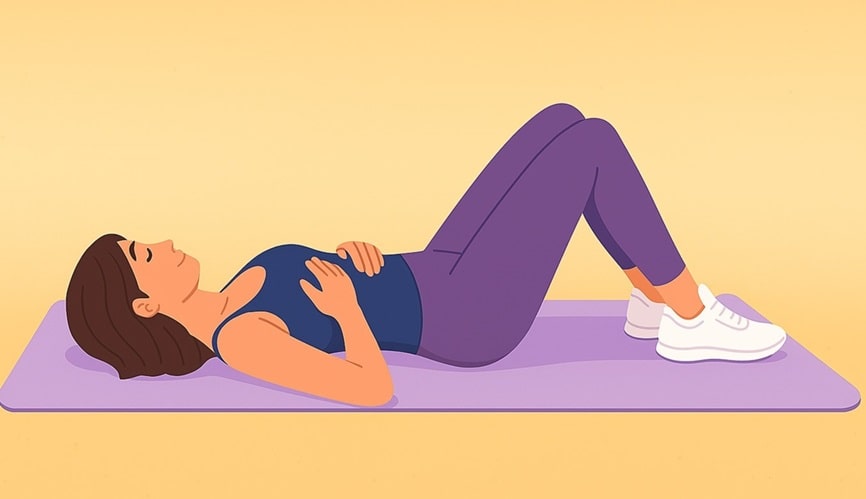
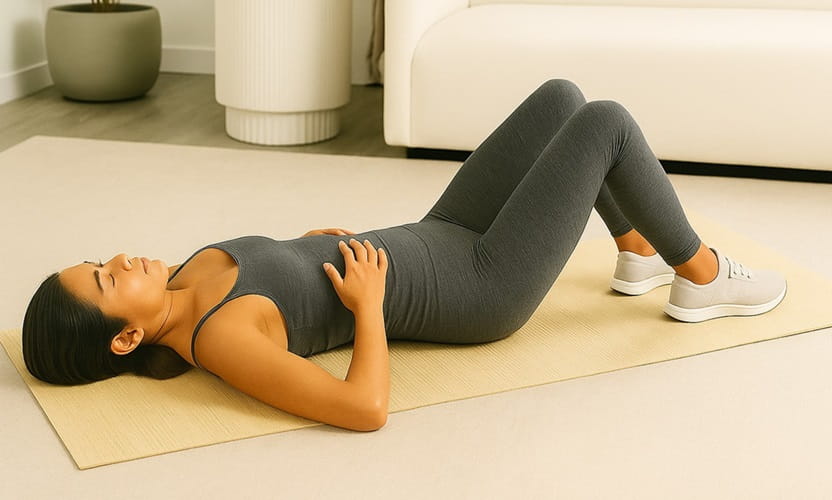
Begin supine (lying on your back) with knees bent and feet flat on the floor. This neutral spine position facilitates diaphragmatic excursion (the movement of the diaphragm muscle during breathing). Sitting upright is an acceptable alternative if supine is uncomfortable.
Hand Placement
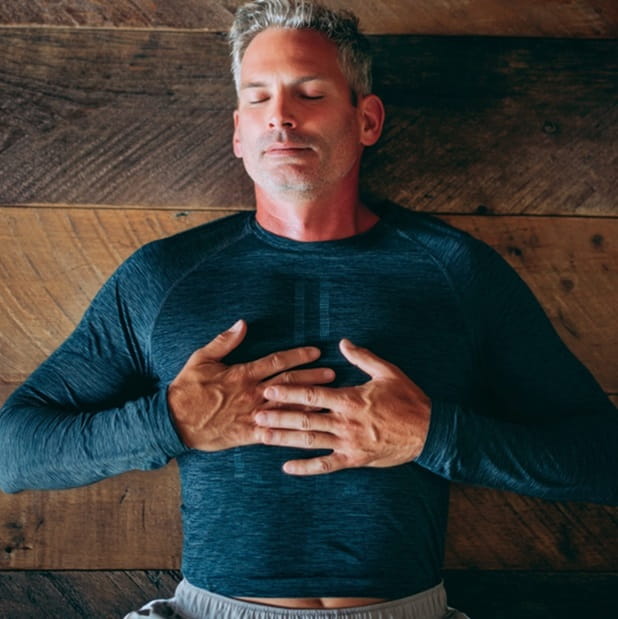
Place one hand on the chest (upper sternum) and the other on the abdomen (just below the rib cage). This tactile feedback helps ensure minimal chest movement.
Inhalation
Breathe in slowly through the nose for 3–4 seconds, focusing on expanding the abdomen so the hand rises while the chest hand remains relatively still. Imagine the breath “filling” the belly.
Pause
Hold the breath gently for 1–2 seconds without tensing other muscles or shoulders.
Exhalation
Exhale slowly through pursed lips for 4–6 seconds, feeling the abdomen deflate as the diaphragm relaxes. Optionally, apply light inward pressure with the abdominal hand to increase resistance and further stimulate central duct emptying [8].
Repetition
Perform 10–15 cycles per set. Rest for one minute, then repeat for a total of two to three sets per session. Aim for two sessions per day, adjusting based on tolerance and clinical guidance.
Integration with Limb Movement
For upper-limb lymphedema, try to match your arm movements with your breathing. For example, breathe in while lifting or reaching with your arm, and breathe out as you bring it back down. This helps your muscles and breathing work together to move lymph more effectively [2].
Conclusion
Diaphragmatic breathing is a simple and low‑risk intervention that harnesses the body’s own respiratory mechanics to enhance lymphatic return.
Evidence demonstrates its ability to reduce limb volume, improve symptom burden, and augment standard therapies in both upper and lower‑limb lymphedema.
By helping create pressure in the body, diaphragmatic breathing acts as a central lymphatic pump, clearing central conduits and facilitating peripheral drainage when combined with exercise or manual techniques.
For optimal results, it should be integrated into daily self‑care, within CDT protocols, and around limb exercises.
Given its psychological benefits and ease of instruction, diaphragmatic breathing empowers you to actively participate in your lymphedema management, ultimately improving function and quality of life.

References
1/ Douglass J, et al. An Enhanced Self‑Care Protocol for People Affected by Moderate to Severe Lymphedema. Methods Protoc. 2019 Sep 4;2(3):77.
2/ Moseley AL, Piller NB, Carati CJ. The effect of gentle arm exercise and deep breathing on secondary arm lymphedema. Lymphology. 2005;38(2):136–145.
3/ Wang J, et al. The rehabilitation efficacy of diaphragmatic breathing combined with limb coordination training on lower limb lymphedema following gynecologic cancer surgery. [J Clin Rehabil.] 2024.
4/ Amany RMAW. Effect of resisted deep breathing on post‑mastectomy breast cancer patients with lymphedema. MJCU J. 2024.
5/ NP. Does breathing have an influence on lymphatic drainage? Wounds Int. 2006. https://woundsinternational.com/wp-content/uploads/2023/02/content_11070.pdf
6/ Physio‑Pedia. Manual Lymphatic Drainage. https://www.physio-pedia.com/Manual_Lymphatic_Drainage
7/ Koya Medical. Diaphragmatic breathing and lymphatic flow. https://www.koyamedical.com/blog/diaphragmatic-breathing-aka-belly-breathing-explained-by-experts
8/ Airos Medical. Lymphedema and the Powerful Effects of Deep Breathing. Airos Medical. 2022. https://airosmedical.com/lymphedema-and-the-powerful-effects-of-deep-breathing/
Disclaimer – The information provided on this website is intended solely for educational purposes and should not be construed as medical advice. The information is not a substitute for professional diagnosis or treatment. Always consult a qualified healthcare provider before making any health‑related decisions. Lymphedemalifeline.org, its staff, and its authors assume no responsibility for any adverse outcomes resulting from reliance on the content herein.